
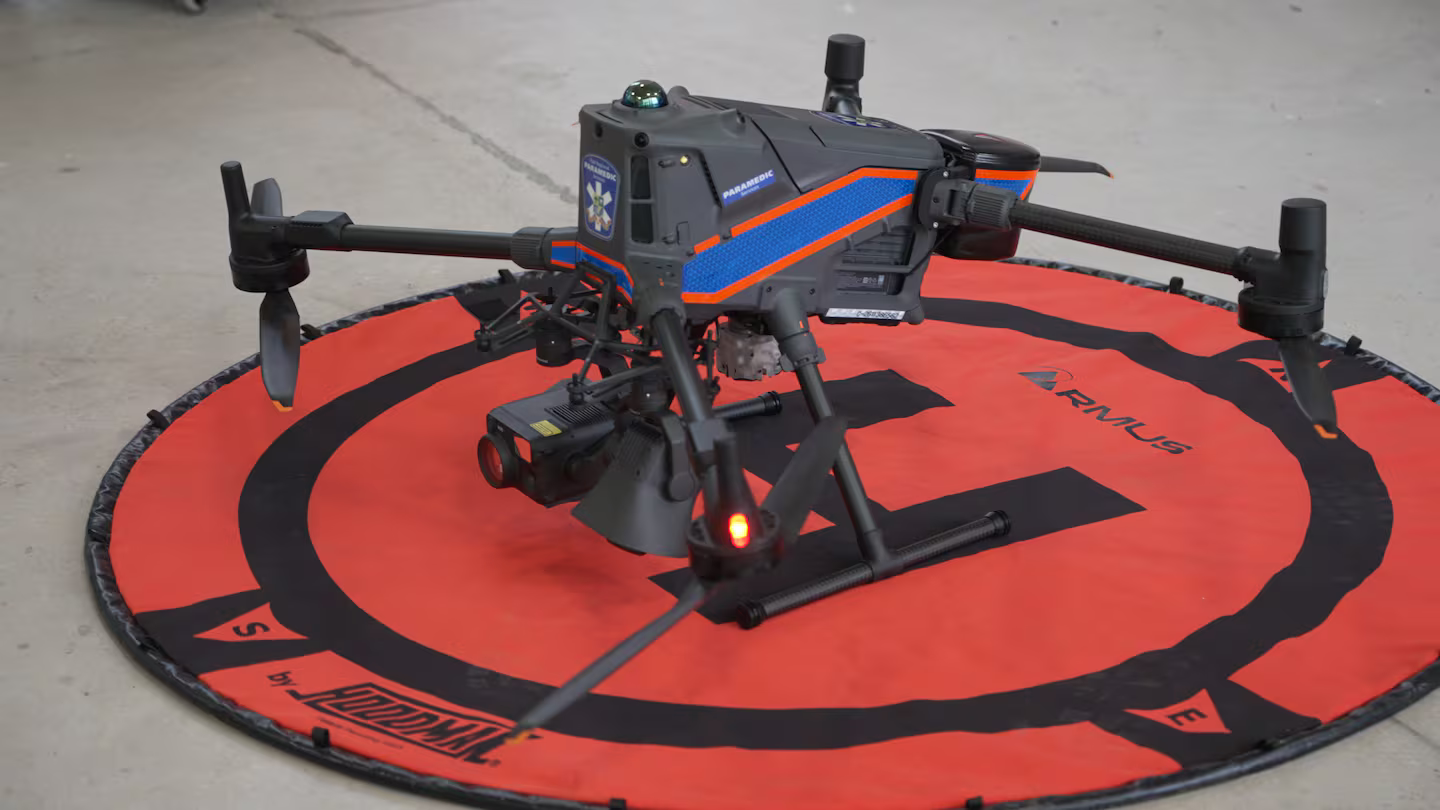
Pilot project for now focuses on Bolton, before moving wider.
Drones could soon be responding to 911 emergencies calls in Mississauga. They already are in other parts of Peel Region.
In September, the Peel Regional Paramedic Services began testing out the use of medical drones to respond to specific types of calls.
When someone calls 911 with a time sensitive medical emergency and the location is a remote part of Peel Region, a drone can be dispatched to arrive there before an ambulance.
The Medical Drone Pilot Program will focus on cardiac arrest, opioid overdose, severe bleeding and serious allergic reactions.
The drone would be equipped with an AED device for heart attacks, naloxone for overdoses, epipens for reactions and trauma supplies for major bleeding and wounds.
The 911 dispatcher remains on the phone the entire time and assists the person — either the wounded person or a support person — in using the medical devices. The drone just delivers the tools — and it doesn’t land, it drops it from several feet in the air.
It’s unlikely that Mississauga residents will see any of these medical drones over the next few months. That’s because for now the pilot project is contained to within a few kilometres of the Bolton Paramedic Satellite Station — the most remote parts of Peel Region.
“The Medical Drone Pilot Program will focus on cardiac arrest, opioid overdose, severe bleeding and serious allergic reactions.“
“Residents deserve access to the best possible emergency care, regardless of where they live,” said Nando Iannicca, Regional Chair and Chair of the Peel Board of Health. “By integrating new technologies with the expertise of Peel’s paramedics, we are building a stronger, more responsive system of care that supports residents during the critical first minutes of an emergency.”
The data pilot from the pilot project will be used to collect evidence on how survival rates can be improved in cardiac emergencies, among other health emergencies.
Peel Region says that there are no commercial or third-party operators involved and that all drones are piloted by paramedic staff, under licence from Transport Canada.
The drone will fly around 200 ft above the tallest structure in their flight path and go up to 60 km/h.
When it comes to privacy, the drone does record audio and video of its journey. Peel Region stresses that the drone is not used for surveillance purposes and only for operational matters, but the footage is recorded and stored.