

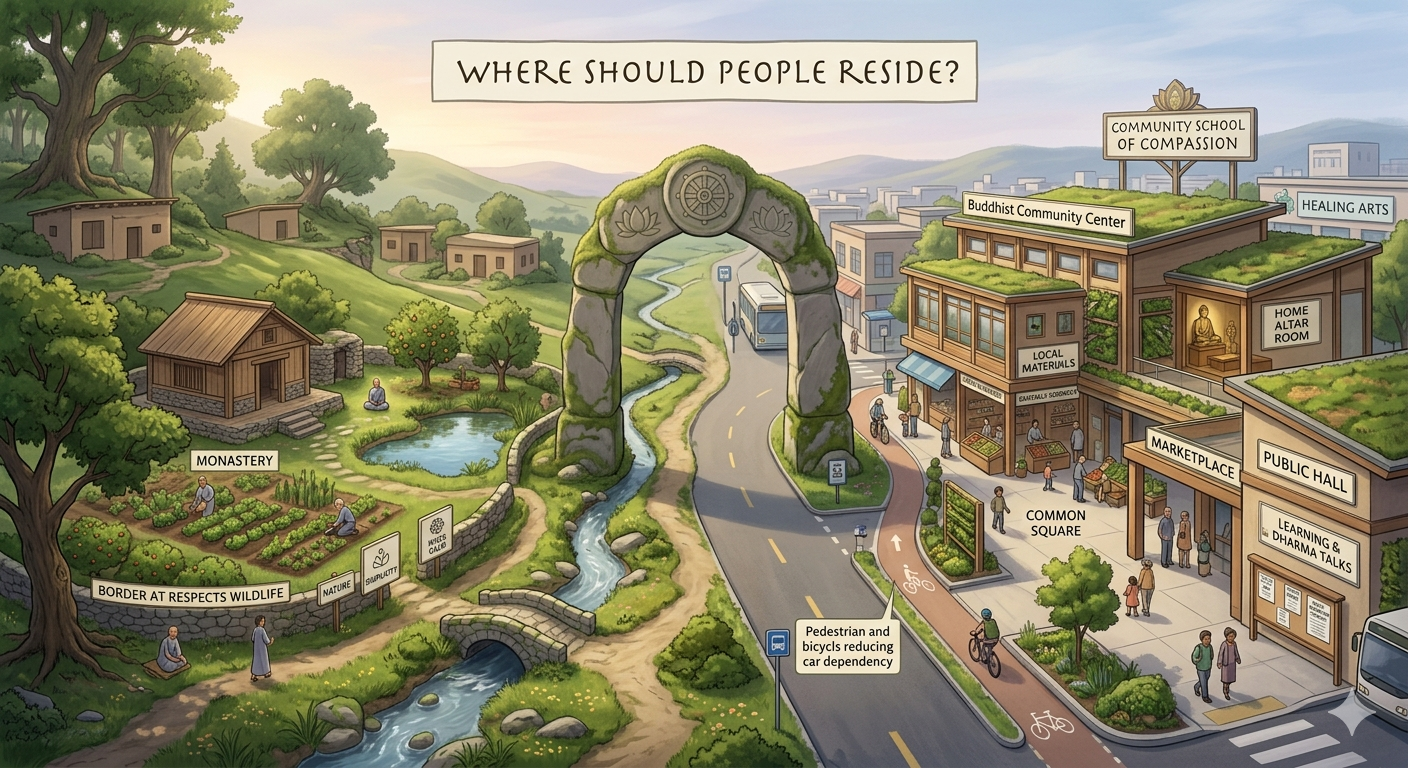

Where should people “reside”? In homes, of course, but is home a place where we should stay forever? In the animal realm, even a little bird leaves its nest after it has grown. Or, when a puppy becomes big enough, it likes to venture out of the house to play. The Chinese character “home” is composed of a pig under a roof—if someone stays home every day with nothing better to do, how is this pattern different from that of a pig?
Since home is not a permanent resting place, where should we “live”? Some people “settle” on money, but if they are defrauded, or their stocks plummet, and all is lost, then where will they “reside”? Others “reside” in love, for love is indeed a source of happiness in life. But, because of life’s impermanence, love changes; if couples divorce and lovers become enemies, where will they “reside”? Still others “settle” themselves in high positions. However, after each election, the elected officials happily step up to their new positions as the unelected step down in dismay. After stepping down, where are they to “settle”? Still others may “reside” in their careers, but they become so busy in pursuit of success that they neglect their spouses and children. In the end, they forget they have families and even ignore their personal well-being. To counter this tendency, the Diamond Sutra teaches that we should not “settle” on sights, sounds, smells, tastes, feelings, or phenomena.
So where should people “reside”? “One should cultivate the bodhi mind with nonabiding.” Look at the sun; it “resides” in the sky with nothing to hang onto. But it is in no danger of falling, for “non-biding” is where it “settles.” Similarly, monastics appear to be without a home, but in reality, everywhere is home for them. Their lot in life is indeed one of tranquility and liberty!
In the course of our lives, fame and fortune, money and material property are not entirely unimportant. However, we should use them and not be used by them. We should “pass through the flowering shrubs and bushes without letting a single leaf attached to us.” Even Emperor Shunzhi of the Qing Dynasty longed for the tranquility and ease of the monastic life, lamenting, “A hundred years as a king is no comparison to even half a day as a monastic!”
“When we possess Dharma joy, we need not indulge in worldly pleasures.” This is the best prescription for settling the mind and purifying our nature to be able to rest our bodies and minds is the path to fulfilled and happy lives. We should not “reside” in the five sensual desires and worldliness, but rather, live lives of simplicity and peace. We should never be slaves to money, but “settle” our minds on contentment. We can then adjust our lives accordingly, and in following our circumstances, live carefree lives!