

Neighbourhoods are changing with new as-of-right zoning. Restrictive rules are loosening – owners can now add more units to their homes.
Remember the fuss and opposition a homeowner used to trigger by renting out a basement apartment to a tenant other than a family member?
The practice of sharing the bedrooms of your principal residence to someone in the market for an affordable place to live is now as common as sharing a bike. Rarely do you have community associations heading to city hall to demand that councillors maintain the character of a neighbourhood by legislating how many people can occupy a dwelling.
In fact, where we once had restrictive rules around what may be built in a specific neighbourhood, we now have a wide loosening of the rules. Instead of having to prove that you need an added suite or two, the homeowner is entitled to erect or add a number of suites or units on what was once considered a single-family lot.
This new reality of as-of-right zoning – in place for about two years – is poised to trip up residents living with the old assumptions. How did it come about? Why the change? And how did it happen with such relatively little protest and uproar?
The city of Toronto and many municipalities in Ontario face a pressing problem with the shortage of affordable housing. Increasingly, children cannot afford to live near their parents and must locate hundreds of kilometres away to afford the price of a house near the Golden Horseshoe.
At the same time, the GTA and Ontario are attractive destinations for a global populace.
At a public meeting that I convened at Birkdale Community Centre, November 25, the city’s chief planner Jason Thorne told residents that there is tremendous pressure on Toronto’s housing stock.
For every affordable housing unit the city approves, it loses 10. The homeless population number 12,000 and there are 100,000 families on the social housing waiting list. Those who can find a rental unit are paying on average $2,300 to $2,500 for a one-bedroom unit.
Meanwhile, the world wants to live here. Some 269,000 new people arrived here in 2024 – that’s 50,000 more than New York city. Toronto’s population topped 3.2 million that year and will reach 4 million in 25 years. The city needs 30,000 new housing units per year to accommodate the new reality – all at a time when the average house costs five times the average household income.
To service this growing population, the province of Ontario and the city government have both enshrined legislation and bylaws that fundamentally change how the traditional “single family residential neighbourhood” is to be developed and managed.
Toronto property owners are allowed to erect garden suites, laneway housing and multiple housing units on what was previously considered a single family residential lot.
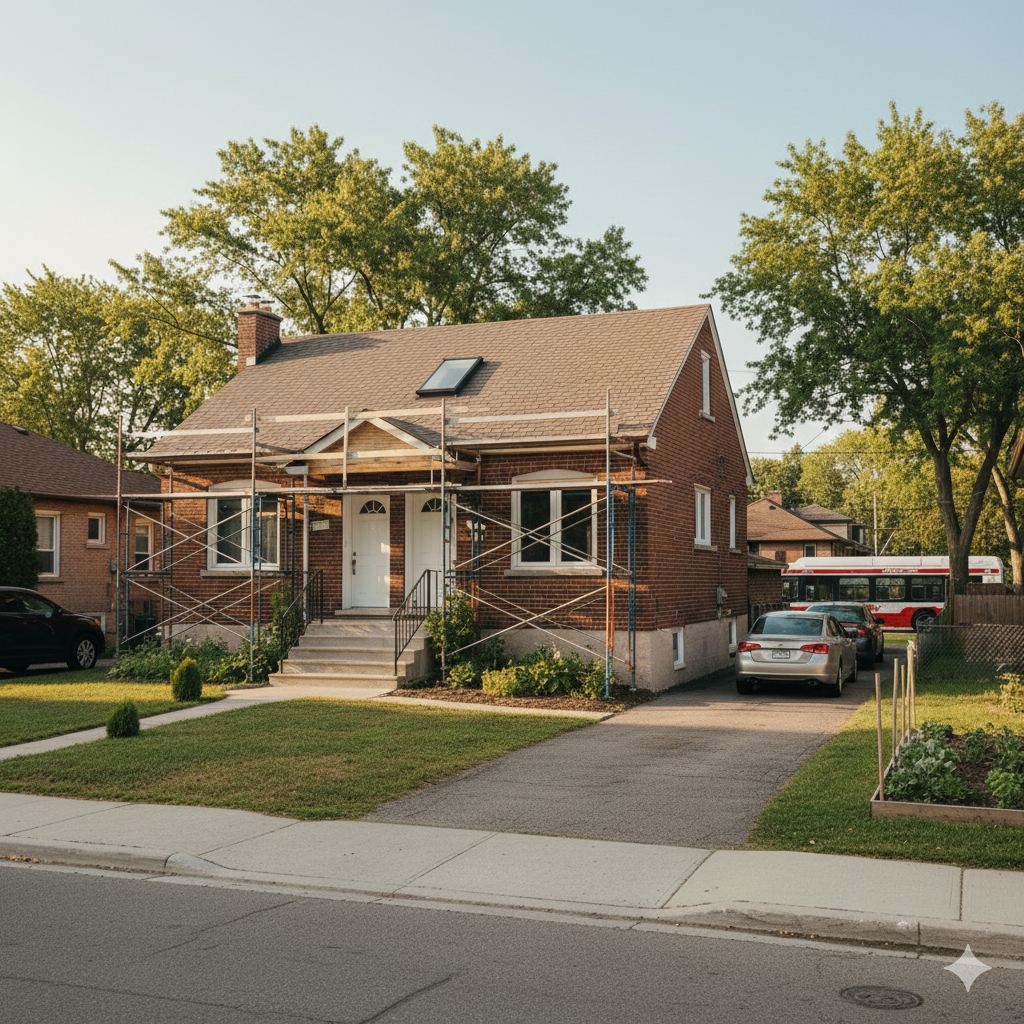
That means that a homeowner can convert a bungalow or a two-storey residence into a four-plex (a six-plex in some wards, but not Ward 21), without requiring a rezoning or a decision from city council or community council. In other words, they can do so “as of right.”
Such changes should comply with certain height and setback requirements. If the proposed project fails to meet the specific standards, the applicant may seek relief via an application to the Committee of Adjustment.
It’s instructive to know that the city no longer requires residential projects and conversions to provide specified parking. This is optional and is left to market forces. The thinking is that if a builder needs to provide parking to make his or her project attractive or viable, then parking will be provided.
These new rules do present challenges for communities – especially when property owners have already shown an inability or unwillingness to keep and maintain present property and house in a state of good repair, with well-kept landscaping, free of garbage and in keeping with community standards.
I urge residents faced with such inconsiderate property owners to call 311 or the office of their local councillor (Ward 21 residents, call Councillor Michael Thompson at 416-397-9274) in order to trigger the Municipal Licensing Standards complaints that aims to remedy the situation.
Housing affordability is a pressing problem. But residents can still demand a well-kept street – no matter who, and how many people, live next door.