


Global Adjustment Charge on electric bills is hitting businesses hard. Local employers are still subsidizing green energy deals.
Small businesses across Ontario are now seeing higher electricity bills, with one of the biggest drivers being a charge called the Global Adjustment (“GA”). It’s a charge that appears on every hydro bill in the province and often costs more than the electricity itself. The GA has become a financial burden that is increasingly hard to manage.
We need to bring more attention to this matter to ensure that job creators and entrepreneurs can continue to grow the economy and don’t instead move to our jurisdictions.
The Global Adjustment was brought in by the Independent Electricity System Operator (IESO) in 2006 to account for the province’s long-term electricity commitments, which include contracts with power producers, maintenance and upgrades to the grid, and conservation programs, and building new energy infrastructure. Most of those expenses are fixed, meaning they don’t fluctuate with consumption. That means the GA rises or falls largely with Ontario’s market price of electricity.
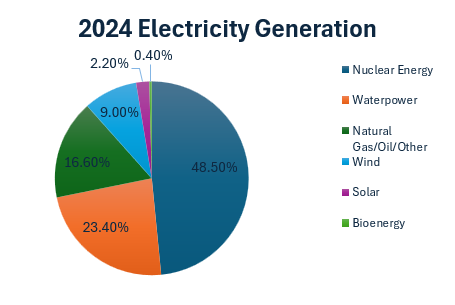
The market price changes every hour depending on demand and supply. If demand is low, the price falls, and if demand is high, it rises. Nuclear and hydro generation are very steady, low-cost supplies that dominate Ontario’s electricity supply and generally hold the price quite low – usually in a range of two to three cents per kilowatt-hour.
However, many renewable and gas generators are getting guaranteed contract prices well in excess of 10 to 13 cents per kilowatt-hour. Because the market price often remains quite low, the difference between the market price and the contracted price grows, and that difference is passed on to consumers through the GA.
This means that businesses are basically paying through their electricity bills to make up for the province signing various green energy contracts, as well as gas contracts, that aren’t in line with market rates. How is this fair for business owners? This means greater costs for local businesses – which means they will have less revenue to pay employees or will pay the costs onto their consumers. Or both.
For many small businesses, the increasing GA charge comes at a harsh time as other operational costs rise. Business groups from across the province have demanded reforms that would make the system more manageable and fair.
Though future demand growth from electric vehicles, population increases, and new industrial projects may stabilize costs in the long run, small businesses highlight the need for relief now.
For the time being, electricity remains one of the most unpredictable expenses on their income statement, driven not by how much power they use, but by how Ontario’s complex pricing system distributes the cost of keeping the grid running.
HAVE YOUR SAY! YOUR VOICE MATTERS!
Do you think Global Adjustment charges, property taxes, or other expenses are hurting local job creators? Do you think small businesses need urgent relief from rising hydro costs and tariffs? Share your thoughts at info@mpulse.ca