


2025 annual energy report shows shift from natural gas to electricity comes with higher cost
The City of Mississauga’s latest annual energy report explains a shift in sources of energy for the city’s buildings, and shows the rising costs that have come with that shift.
“City of Mississauga continues to make strides in positioning itself as a leader in the environmental stewardship space with, among other things, the declaration of a Climate Emergency in 2019,” the report explains.
It was that “climate emergency” declaration that saw the city pivot away from natural gas usage and towards more electricity use. However, the electricity use was costlier.
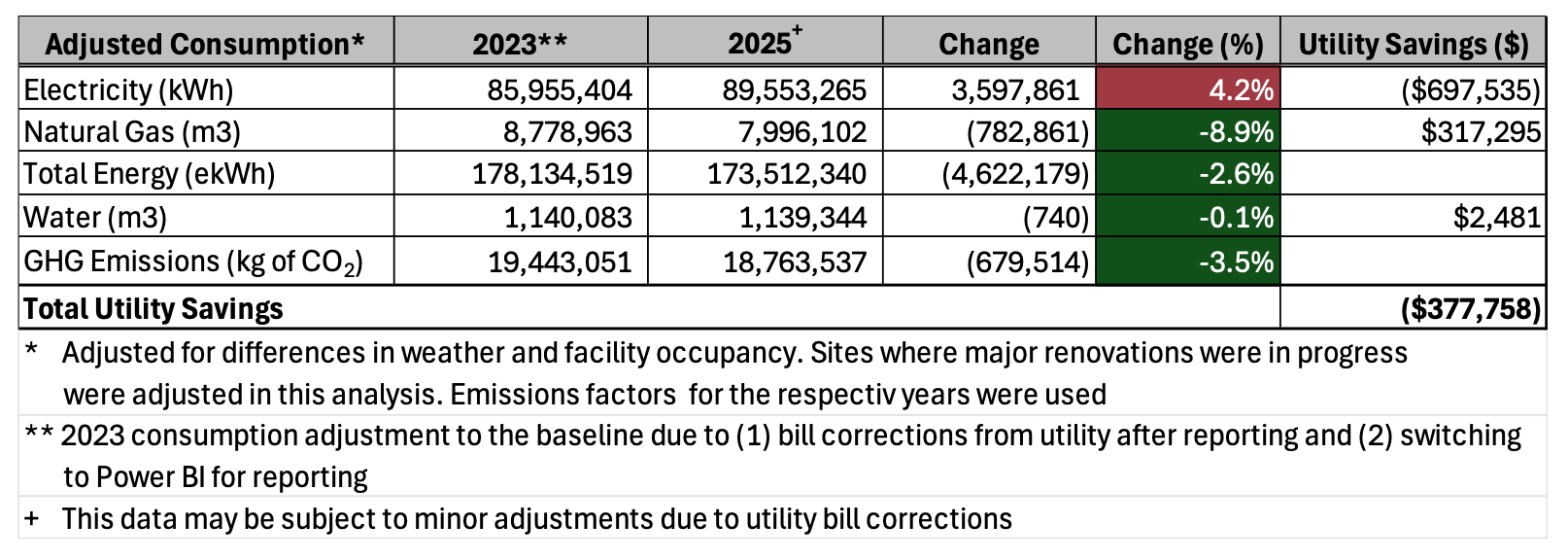
City-owned facilities reduced their natural gas consumption by 8.9%. To make up for this reduction, they in turn increased electricity usage by 4.2%. This switch saw utility bills at city properties go up by $377,758 for the year.
They explain this is “partly due to increased service levels and partly due to fuel-switching to the cleaner electricity grid.”
The report suggests the city is accepting of these higher costs because it led to a 3.5% reduction in greenhouse gas emissions on the part of municipal facilities.
In 2023, the City calculated their GHG emissions at 19.4 million kgs of CO2, but by 2025 that decreased to 18.8 million kgs of CO2. This slightly exceeds their policy objective of decreasing GHGs by 1% per year.
It appears that the City is willing to accept further cost increases associated with this approach.
“The drive to decarbonization is expected to increase our portfolio’s consumption of the cleaner electricity grid, tempered by efficiency gains, and reduce our consumption of the carbon-intensive natural gas fuel,” the report explains.
The report also touts the City’s first “Net Zero Energy Building” — which is the newly opened Fire Station 125, at Tenth Line and Aquitaine.
“We have integrated several advanced systems, including heat pump technologies and solar photovoltaics, which are increasingly becoming common in our other developments, where applicable, in order to reduce our carbon emissions,” the report explains.