

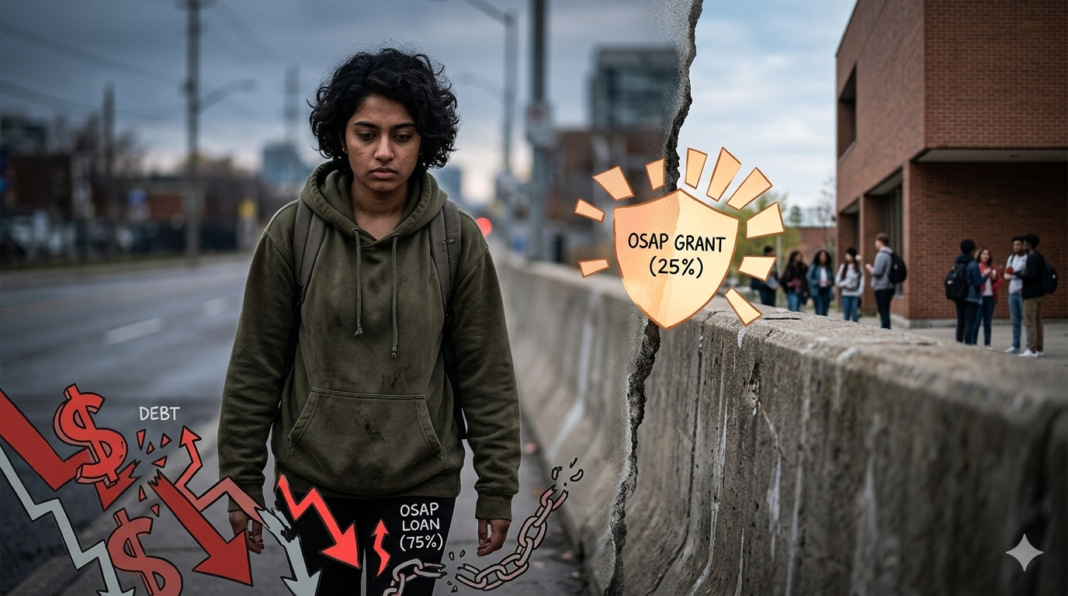

The latest misstep from the provincial government has led to a systematic slashing of OSAP. Their reasoning? They claim students have been “wasting” OSAP on unreliable courses.
I relied on OSAP when I entered university thirty years ago. I went into Science, an assured path for a job upon graduation, right? Wrong.
It took many more years of schooling before I became a professional in my chosen field of study. In fact, my degree, peppered with “useless” electives, showed me learning is multi-dimensional. It need not only be a means to an end.
More importantly, the number of STEM graduates to work ratio was still manageable thirty years ago. Today, the landscape is far more crowded. Currently, we have 70,000 STEM graduates per year in Ontario. Longitudinal data from 2017 shows that even then, only 7 in 10 computer science and engineering graduates landed jobs in their fields.
Since 2017, we have endured a pandemic, a mild recession, and now a volatile era of international tariffs. Where is the guarantee that a “return on investment” approach to education will help graduates land jobs today?
For the past twenty years I have been an educator at a Scarborough-based College. The beauty of college has always been in its community-minded programming that allowed students, many of whom are from marginalized, lower-socio economic backgrounds to get into skilled areas, with decent pay.
“We have hundreds
of thousands of
graduates who went
through a system
that ‘should’ have
ensured a job. Did
they all get into their
field of study?”
These students often use college as a stepping stone to enter the University system later, and they rely on OSAP to do it. These new policy changes do not just affect students entering higher education for the first time; they punish those who want to improve and move up in their careers.
The steady erosion of government funding to colleges have leant itself to a demolition of this underlying guiding principal. The ensuing scramble to stay afloat leading to the exploitation of international students, with unchecked tuition fees, low-wage jobs, that were brought into our system without proper infrastructure.
We have hundreds of thousands of graduates who went through a system that ‘should’ have ensured a job. Did they all get into their field of study? Where is the data to see if that experiment worked?
The $6.4-billion injection into college funding, although welcome, is at the cost of our student’s solvency. By flipping the OSAP ratio to a maximum of 25% grants and a minimum of 75% loans will only lead to elitism in education.
Education is meant to be egalitarian: for all people. If we continue to view it solely through the narrow lens of a “return on investment” that we can’t even guarantee, we risk creating a system that fails all of us—leaving our most vulnerable students with a lifetime of debt and a province with a “skilled” workforce that can’t afford to live in the communities they serve.