


How rising fuel prices impact local small businesses. When the price of gas goes up, so does the cost of doing business.
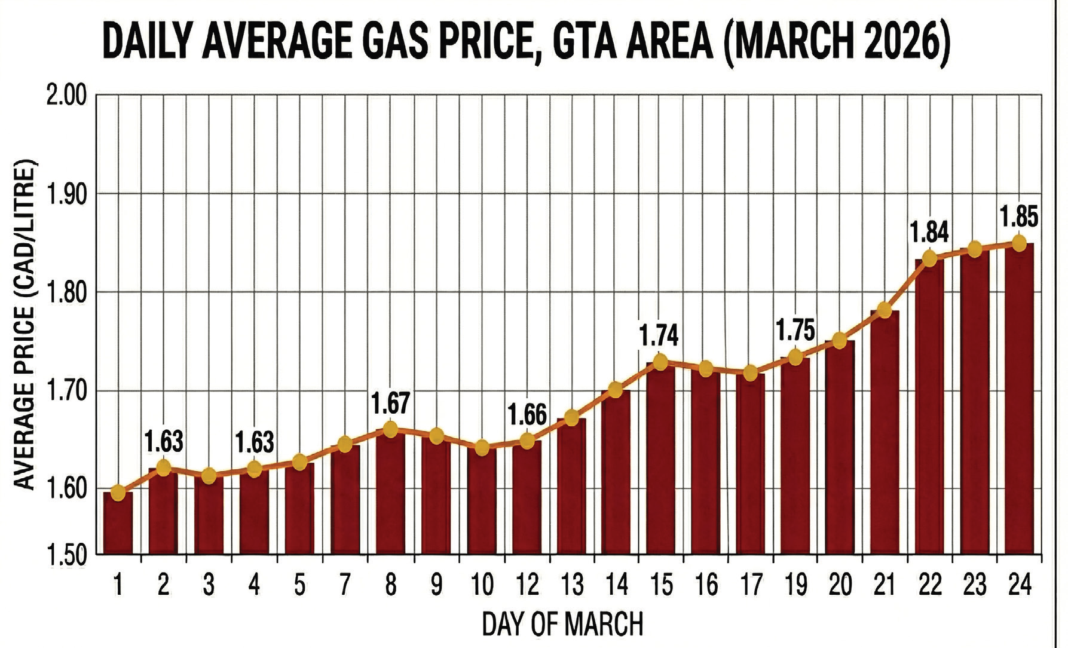
Since the last issue of MPulse News was published in early March of this year, unleaded fuel prices across the GTA have increased by roughly 30 cents per litre and approximately 45 cents per litre for diesel over a 30-day period.
That equates to an increase of 22% and 26%, respectively. Driven by a conflict a world away in the Middle East, small businesses here in Canada are suffering as a result.
Adding to the negative impacts that tariffs have taken on the Canadian economy since early 2025, increased fuel prices will have the following effects on small business owners.
1. Producers
Manufacturing almost always relies on fuel as an input for production. As fuel prices increase, businesses that make things will have to pay more to operate their machinery and power their vehicles. Farmers who often rely on diesel-powered tractors, combines, and equipment will have to pay more to cultivate their fields, plant seeds, and harvest crops. All of which drive up the cost of the products we buy and the food we consume.
2. Distributors
Pretty much everything you buy from a store or online has been shipped by a truck, train, plane, or van. All of which, save for electric vehicles, require fuel to operate. As the price of fuel increases, so too does the cost of everything.
ng being delivered by distributors; thus increasing the prices you and I pay at retail.
3. Retailers
Given the above and the fact that the cost of manufacturing products and growing food have increased due to soaring fuel prices, as well as the cost to ship said goods to market, it’s no wonder consumers will ultimately pay much higher prices at retail since the costs incurred by these downstream retail businesses have thereby increased so significantly.
So how does all this affect consumer behaviour and the small businesses they support?
Well, if consumer expectations are such that they believe the prices of the goods and services they need and want are increasing, their spending habits will change accordingly – leading many to consume less in order to save money. As a result, expenditures like dining out, impulse buys, and the purchases of non-essential goods and services will all be reduced, therefore impacting the local small businesses who provide them. We may even start to see more people working from home to save on gas. The results of which will also impact the small businesses these workers would otherwise support during the work week had they been commuting to the office. The local lunch spots, cafes, dry cleaners and the like would all see a decline in their businesses. Which, in theory as well as in practice, would have a further trickle down effect on the products and services they would purchase, not the least of which would be labour – potentially leading to an increase in unemployment.
In short, when fuel prices increase so quickly and significantly, just about everybody loses.
As fuel prices continue to surge, what are our local, provincial, and federal leaders doing to offer relief to consumers, small business owners, and farmers?
Paul Micucci is the founder of the Meadowvale Business Association.
HAVE YOUR SAY! YOUR VOICE MATTERS!
What should our elected officials be doing to help reduce the cost of fuel? Email your response to info@mplulse.ca and we may publish your comments in a future issue.