

Dr. Itah Sadu is one of many Black Canadians who deserve our recognition and celebration.
I have been a Toronto City Councillor, representing Scarborough residents since 2003. A prized framed print hangs in my City Hall office overlooking Bay Street. It is a picture of William Peyton Hubbard, born at Bloor Street and Brunswick Avenue in the year 1842. At the time he was one of an estimated 1,000 African Canadian residents in a Toronto population of 40,000. W.P. Hubbard would become Toronto’s first non-white alderman in 1894. He went on to win 15 municipal elections and served as acting mayor of Toronto.
More than 150 years after Hubbard, at the end of the last term of council in 2022, I was the lone Black member of a Toronto council of 26 political representatives. The local media kept reminding everyone that in a city with the motto, Diversity our Strength, and which boasts that Toronto is among the most multicultural cities on earth, the city council makeup makes a mockery of the claim.
But, look at us now. This past civic election drastically changed the complexion of Toronto city council and on Black History Month 2026, it is appropriate that we salute the residents of Toronto for recognizing our presence in the Toronto mosaic. At least nine of us self-identify as non-white.
Black citizens have added tremendous energy, skills, passion, love, creativity and unstinting labour and ingenuity to the global mix that drives Canada and sustains our homeland. Toronto is Canada’s symbol of the power of inclusion – a place where hope, prosperity and peace are possible when human beings congregate in an atmosphere of respect and inclusion.
Many times, we fail to realize our potential. Still we try.
The first African to set foot on what we now call Canada was Mathieu Da Costa, some time around 1608, hired as a translator for Samuel de Champlain’s 1605 expedition. Four decades later, Louis the 14th authorized slavery in New France. A hundred years later Black Loyalists reached Nova Scotia – lured by a promise of freedom and land rights in exchange for fighting with the British in the American Revolution of 1775 to 1783.
For too many of us, knowledge of the presence of Africans in Canada ends with the shining achievement of the Underground Railroad, the path to freedom for many enslaved Americans. But there is so much more to celebrate during Black History Month, and at all times.
In the 1960s, 70s and 80s, waves of fellow Africans from Caribbean plantations arrived in Canada to boost the vibe, bolster the culture and spice up the recipe that was the new Canada in the making. The sudden burst of Blackness tended to over-shadow a couple centuries of Black achievement in the Great White North. For example:
In 1857 William Neilson Hall became the first Black person and first Nova Scotian to win Canada’s Victoria Cross.
In 1858, James Douglass became the first appointed Black politician in Canada and then took over as Governor of the colony of British Columbia. At Douglas’ invitation, African Americans emigrated from California to Victoria to become Canada’s first and only all-Black police force.
Thousands of Blacks fought in our army against the British in the War of 1812. A hundred years later in 1916, in the First World War, military officials allowed the creation of the No. 2 Construction Battalion of exclusively Black soldiers. They were not permitted to fight and instead served in the Canadian Forestry Corps.
So, when students across Canada this Black History Month completed assignments and presentations on significant or famous Black Canadians, they had a plethora of choices that grow by the day.
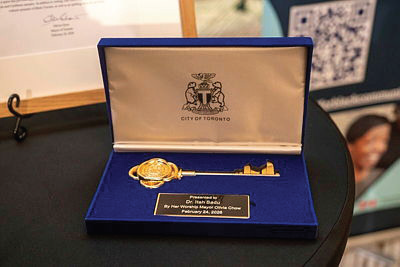
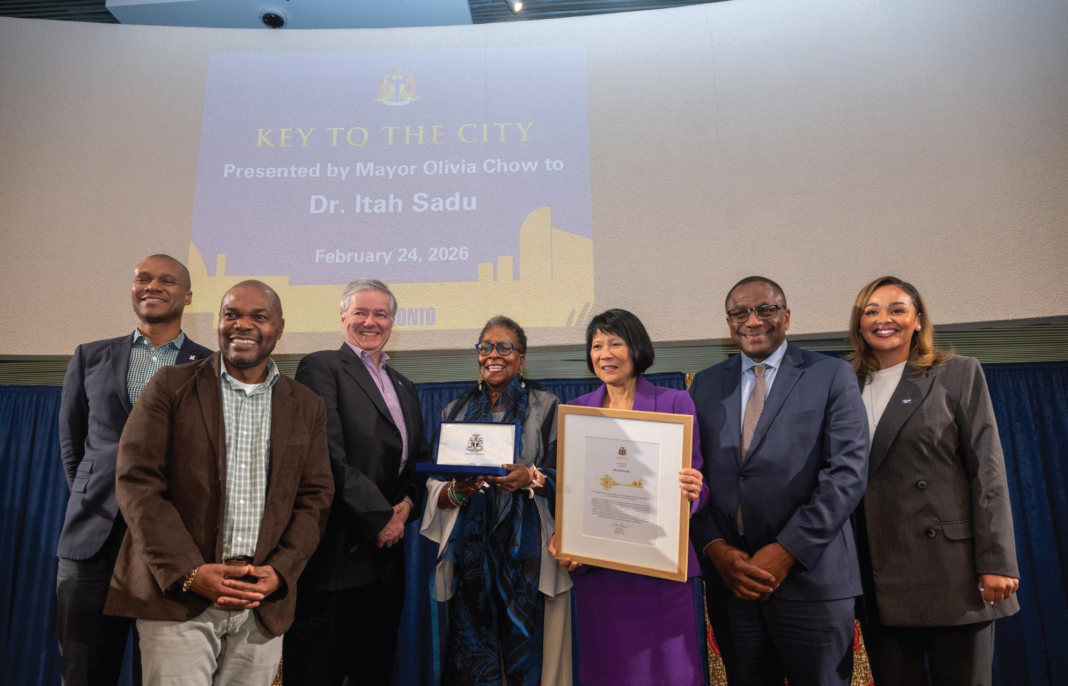
This past week, Dr. Itah Sadu, proprietor of A Different Booklist, the great bookstore at Bathurst and Bloor, received the Key to the City from Mayor Olivia Chow. The honor caps Sadu’s work in carving out a corner of the city as Blackhurst – an iconic neighbourhood that sustained Black businesses, enterprise, artists and community aspiration.
Bathurst and Bloor, as Blackhurst, has been a gathering place for Blacks since Deborah Brown escaped slavery in America to settle on Markham Street. Smack in the middle of a highrise condo conglomerate that has replaced Honest Eds and Mirvish Village, Itah Sadu and friends have carved out The People’s Residence and Cultural Centre as a permanent visible presence that curates our stories for generations.
W. P. Hubbard would have been proud. Freedom lovers everywhere anticipate a future where people of African descent walk shoulder to shoulder across Canada – not in a 51st State – but, elbows up, as proud Canadians. Today. This Black History Month. And every year.